* Hungarian Dances yesterday at the St James Theatre Studio was a fabulous experience. A treat, a privilege and a joy to perform with amazing musicians in such a great venue. Huge thanks to everyone concerned! More Hungarian Dances later in the year at the Musical Museum, near Kew Bridge, on Sunday afternoon 8 September and Pen Fro Literary Festival, Pembrokeshire, on 12 September. Watch this space for further dates...
* If you're near a big screen tomorrow, go and see the FREE, live, open-air relay of Mayerling from Covent Garden. It is top ballerina Mara Galeazzi's farewell performance with the Royal Ballet and features Edward Watson as Prince Rudolf. I went to see them both in action in the ROH a couple of weeks ago and emerged utterly wrung out by the combination of intense emotion and astonishing dancing. Is Mayerling the greatest ballet drama ever created? Personally, I think it might be. Don't miss it. Take a brolly if you must, but just don't miss it.
* Please support the ISM's campaign to secure funding for music education beyond 2015. There's a petition to sign, here.
Every little helps, or we hope it does.
* Here's a discussion from Voice of Russia radio that I did last week with Alice Lagnado and John Riley about the lasting importance of The Rite of Spring. The writes, the rights, and sometimes the wrongs too. http://ruvr.co.uk/radio_broadcast/77030634/115272201.html
* And here's a Friday Historical in advance, because I will be otherwise occupied this week: Fritz Kreisler and his cellist brother, Hugo, with pianist Charlton Heath, playing one of my favourite pieces from the Hungarian Dances concert: Kreisler's Marche miniature viennoise. (Did you know Kreisler had a cellist brother? Neither did I. They're a gorgeous team.)
We are just back from the Ulverston International Music Festival in the South Lakeland, where we, um, we got a standing ovation...! Which was rather gratifying to say the least, especially as this was a morning coffee concert and by then it was coming up to lunchtime. Huge thanks to everyone at the festival for a day to remember. Above: Anthony Hewitt (who's artistic director of the festival), David Le Page and me, milking our moment of glory in the Coronation Hall...
I also did a pre-concert talk with everybody's favourite cellist on Thursday night... He and pianist Ian Brown gave a sensational recital featuring, not least, the cello sonata by Frank Bridge, which is a work everybody ought to hear and marvel at, especially when it's played with such eloquence. An English Rachmaninov? Not far off.
Ulverston was the birthplace of Stan Laurel, so look who's lurking just by the Coronation Hall doorway. Oddly enough, I nearly had the opportunity to say "Here's another fine mess
you've got me into..." due to a strange incident at 1am the night before our concert... Suffice it to say that Gretel and I were in a huge flap, Tony's dad heroically ventured forth to save the day, and Dave slept through the whole thing.
Listen out for our broadcast today on BBC Radio 3's In Tune! David Le Page, Viv McLean and I will be performing some extracts from our 'Hungarian Dances' concert ahead of Ulverston on Saturday, the St James Theatre Studio next Tuesday and the Musical Museum, Kew Bridge, on 8 September (and more later). http://www.bbc.co.uk/programmes/b020vjxx
‘A saga
whose passion for music, Hungary and history sings out on every page.’
Boyd Tonkin,The Independent, on
Hungarian Dances by Jessica Duchen
Mimi, a Hungarian Gypsy girl, is determined to play the violin, in defiance of family
traditions. She becomes a classical virtuoso, but at a terrible personal
price...
Alternating narration and music, this emotional roller-coaster traverses 90
years, richly illustrated with music of irresistible beauty that blurs the
boundaries between the classical and Gypsy styles.
DOHNANYI: Andante rubato alla zingaresca
DINICU: The Lark
MONTI: Czardas
KREISLER: Marche Miniature Viennoise
DEBUSSY: Violin Sonata
VECSEY: Valse Triste
BARTOK: Romanian Dances
BRAHMS: Hungarian Dance No.2 (arr. Joachim)
RAVEL: Tzigane
HUBAY: Hejre Kati
DAVID LE PAGE, born in
Guernsey, is the leader of the Orchestra of the Swan, Stratford-upon-Avon, and
of the Adderbury Ensemble. He trained at the Yehudi Menuhin School and in Bern
with Igor Ozim and Sidney Griller. He was a prizewinner in BBC Young Musician
of the Year and the Yehudi Menuhin Competition. He plays the living daylights
out of this repertoire.
ANTHONY HEWITT won top
prize at the William Kapell International Piano Competition in 1992 and studied
at the Menuhin School, the Curtis Institute in Philadelphia and the Franz Liszt
Academy, Budapest. He is artistic director of the Ulverston International Music
Festival, Cumbria.
JESSICA DUCHEN writes
about music for The Independent and is the author of four novels, two
biographies and a number of stage works mingling words and music. Plus JDCMB, of course.
This sweet-toned, quick-witted performance of Hubay's version of Hejre Kati was recorded by the British violinist Isolde Menges in the 1920s. The sound quality is remarkable for the time and the whole thing beautifully bridges the divide between high-art classical playing and the rather earthier Csardas that Hubay transcribed. Menges is definitely inclined more to the classical side of things...
...but the recording is nevertheless getting me geared up for the Hungarian Dances concert-of-the-novel, for which our new team - David Le Page and Anthony Hewitt - has rehearsal no.1 next week. This piece ends our programme. First concert will be in the Ulverston Festival on 8 June, then the St James Theatre Studio on 11 June and we're going on Radio 3's In Tune to talk about it, and play some, on 3 June.
As a disembodied voice said over the firework display by the Thames, "London 2012: we did it right". Wonder if we can keep that up in 2013?
Here are a few handy points for starting the year with best foot forward.
1. Feel free to enjoy the New Year's Day Concert from Vienna. Whatever those self-righteous moaners say about the Vienna Philharmonic, I love it and New Year's Day would feel all wrong without it...
UPDATE, 11.55am: woops. This year's, conducted by Franz Welser-Most, really is "frankly worse than most" and I have SWITCHED IT OFF for the first time in living memory. There's no point grumbling about the number of women in the orchestra if there is an elephant on the podium.
Solution? Make Your Own New Year's Day Concert. Here's Willi Boskowsky, leading a Csardas with violin, smile and real pizzazz in 1967. This, dear friends, is more like it...
2. Make some fun resolutions. Yesterday the Royal Opera House asked us on Twitter for our best operatic ones. Mine include recognising that gold rings are overrated, especially when sourced in the Rhine - stick to platinum in future. And do not write unsolicited love-letters to handsome visitors, even if they can sing in Russian.
3. Then there are non-operatic resolutions, such as practising the piano, going back to ballet class, finishing the new novel, and other things that are probably doomed if you have to make a resolution about doing them.
4. Invest in some good carpet shampoo. Handy for cleaning up others' mess. (I think Solti must have overindulged at the cat party last night.)
5. Ring out the old, ring in the new. What's past is past.
6. Speaking of the Ring, this year there will be so much Verdi, Wagner and Britten around that it's tempting to board up the windows and say GONE SOMEWHERE SUNNY, SEE YOU IN 2014. Which of the three birthday boys will you still want to hear in 366 days' time?
7. While V, W and B are carpet-bombing us (or should that be BWV? is it all a plot by Bach?), please don't forget Lutoslawski. Luckily the Philharmonia is celebrating his centenary. Krystian Zimerman is performing the Piano Concerto that Lutoslawski wrote for him - RFH, 30 January.
8. I have a new concert-of-the-novel in the works, this time based on Alicia's Gift, with the lovely pianist Viv McLean. The story of a child prodigy trying to grow up, it includes piano music by Chopin, Ravel, Granados and others. I read, Viv plays and we'll launch it in the autumn. Ideal as a coffee-concert with a difference. Book us!
9. The Hungarian Dances concert and A Walk through the End of Time are expecting more airings - watch this space. I'm also looking forward to some seriously exciting interviews and various things that are currently queuing up in the ether, waiting to be written and performed.
10. It's tough out there. We'll all have to be positive and
ingenious to navigate through '13. But if we have music, love and
laughter in our hearts, we can do that. We need to invent, communicate, inspire and do good things. And you know something? We intend to. Please join us.
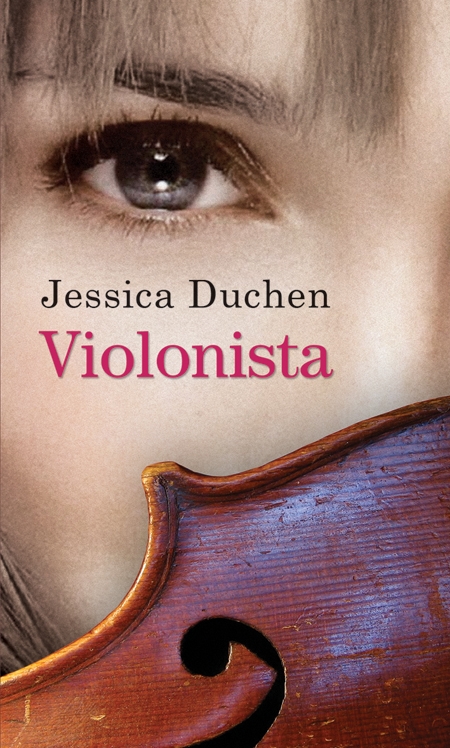
Yes, it's the latest edition of HUNGARIAN DANCES, and it's in Romanian. Heartfelt thanks to Editura Rao in Bucharest for bringing it out with a priceless new title and this arresting cover pic that looks ever so slightly like Nicky Benedetti. More info, in Romanian, here.
To celebrate, here's a special Friday Historical: the incomparable Jelly d'Aranyi, playing... something very Hungarian.
Ahh, what it is to be a pioneer. A few years ago, Philippe and I bust all our gut strings on the Hungarian Dances project: a novel (mine) about 80 years of cross-currents between Gypsy and classical violin playing, with a CD (his) created specifically, though separately, to match. It was, to the best of our knowledge, the first time that a classical CD had been recorded to partner a contemporary novel (most others were just compilations of pre-existing tracks).
Fortunately, in a few short years, we've had the advent of mass downloads: it's a lot simpler to do this kind of thing now. And it seems we were indeed pioneers. Now they're hitting the shelves thick and fast. I was a tad intrigued when Jodi Picoult (who had the same editor at the same publishing house as I did, btw) put out a CD of country music to accompany her novel Sing You Home. Then there was the business of 50 Shades of Grey and Sperm - oops - Spem in Alium...
But Cecilia Bartoli is going a step further: she has long been the Cleopatra of the concept album and her new disc, Mission, has a new historical mystery novel to be its companion piece, written specially for the purpose, by Donna Leon. Classy. Get a load of this:
Blazing sunshine, teeming crowds in the Pavilion Gardens, a brass band whiling away the afternoon, cupcakes galore and a crowd of delighted festival-goers - Buxton in its festive spirit, a rare and wonderful Buxton, and a very welcoming one. Above, the Hungarian Dances Concert team outside the Pavilion: pianist Margaret Fingerhut, JD and Bradley Creswick, the violin's answer to Bradley Wiggins. Enormous thanks to Stephen Barlow, Glyn Foley, Jeff and all the festival team, the AA for rescuing Bradley from a glitch on the A1, and whoever it was who sorted out the weather - it was truly a day to remember.
If you were there and you need some info or you want a CD or a book (I regret to say I underestimated demand and didn't bring enough), here are the vitalstatistics:
You can order Hungarian Dances on Amazon.co.uk in paperback, hardback, Kindle e-book or large print. You can also get it in Dutch or Hungarian, and I'm promised that the Romanian edition (!) should be out soon.
A CD to accompany the book was specially recorded a few years ago by the brilliant French violin and piano team Philippe Graffin and Claire Desert. It's available on Onyx Classics, on disc or download. Get it here. The music for the book is all credit to Philippe, who not only dreamed up the idea, but found the perfect piece to represent the fictional concerto in the novel (it's the Dohnanyi that opens the programme).
And last, but not least, if you want to book us for a Hungarian Dances concert, drop us a line. Yesterday's programme is 75 mins of music and reading with no interval, and there's also a full evening version in two halves. Apart from anything else, it is great fun. Featured works include Dohnanyi's Andante rubato alla zingaresca, Ravel's Tzigane, Vecsey's Valse Triste, Bartok's Romanian Dances, Hubay's Hejre Kati and Monti's Csardas, among others.
I read extracts of my novel, and the fabulous duo of violinist Bradley Creswick (leader of the Northern Sinfonia) and pianist Margaret Fingerhut perform all the appropriate pieces by the likes of Dohnanyi, Bartok, Hubay, Ravel & co, not forgetting Monti's Czardas and Dinicu's The Lark. We're at the Pavilion Arts Centre, kick-off is at 1.30pm and the concert is 75 mins straight through. We love this programme and hope that you will too!
Tasmin talked about her passion for Hamlet, Hesse's Siddartha and the verses of Hillaire Belloc, as well as terming Hungarian Dances "gripping" and "very exciting", and telling a wonderful story about how she inadvertently made her debut in Budapest in a restaurant, playing Monti's Csardas with the resident folk band's cimbalom player after half a bottle of Bull's Blood... And she said some rather nice things about my writing about music that I am waaay too modest to repeat on my own blog, though you can hear them in the broadcast. What you won't hear, though, is Anne's priceless Freudian slip when, signing off at the end of the session, the wrong word emerged instead of "Belloc"! A fine time was had by one and all.
Stop-press news: I'm reliably informed that my novel HUNGARIAN DANCES is to feature as one of Tasmin Little's chosen books in the Proms Literary Festival this afternoon. Tasmin will be discussing her literary favourites at the Royal College of Music at 5pm and the talk is broadcast the interval of tonight's Prom on BBC Radio 3. An extract will be read - I understand they've picked a passage about Gypsy music and the violin in particular. Catch it at the college, on the radio or later on the iPlayer (or catch the book here). That is Paprika part 1 - or chronologically speaking, part 3.
Paprika part 2: Today comes hot on the heels of a truly fabulous evening with the Budapest Festival Orchestra and Ivan Fischer last night. It's all true: Ivan Fischer did indeed become the first conductor at the Proms ever to throw a toy animal from the podium into the arena.
The BFO is unmistakeable for its characteristic mix of suave, smooth sound and absolutely direct, deeply engaged musicianship; as I said in the feature yesterday, when they play you feel the love. This was no exception: they made me fall in love with Mahler in earnest. After two years of head-bludgeoning Mahler-anniversary overkill, that takes some doing.
The first half was unusual for its mix of irony and magic: first, fizzing, demonic Liszt. Mephisto Waltz for once was convincing, seductive, genuinely sensual - and whatever did that harpist do towards the end? Whatever it was, she deserves a medal. Mahler's Blumine blossomed gently and suavely as the concert equivalent of a 'prequel'. And the Liszt Totentanz - usually a bit of a waste of space - proved a brilliant vehicle for the pianism of Dejan Lazic (right). He is a seriously classy player with a singing, certain touch and a terrific feel for Lisztian flair. He also brought along an unusual encore: a spoof fugue by an Italian composer, Giovanni Dettori, which would seem familiar to the younger members of the audience. It did. Fortunately I'd taken my niece with me; she kindly explained that this brilliantly-wrought Bach-style piece was based on a Lady Gaga song. (Now Neil Fisher of The Times has tweeted a link to the sheet music - so you can see it is real!)
And so, Mahler 1. Empathy, detail, brilliance, flow and energy: everything was there. Fischer's was a Mahler straight from the heart and guts, tempered by a sensible and incredibly perceptive brain. Shaping of narrative couldn't have been more convincing if it tried - especially the final movement, with its gradations of dynamic in the distantly approaching triumph. I'm a great fan of the orchestra configuration preferred by Fischer at this concert, with the double basses raised in a row along the back providing a solid, oaky depth across the board and the first and second violins opposite each other at the front of the stage. The tone produced is balanced, clear and homogeneous. And this Mahler symphony, for the first time, felt too short. I could happily have listened to it all night.
But that's where the third part of 'triple paprika' enters: the late-night Prom, complete with flying bunnyrabbit. The orchestra summoned us back from interval fun with one of the violinists playing some Transylvanian folk music while everyone settled down. The orchestra appeared in its everyday clothes and Fischer took up a microphone to explain how the event would work. We each had a raffle-ticket; the tuba player perambulated through arena and stalls asking punters to draw a number. Three numbers, three pieces, and sometimes a flying rabbit to catch, to choose another. Then the vote, which got everyone beautifully heated as we shouted for our favourites and hissed when someone tried to pick the Ravel Bolero.
Everything came off very slickly and rapidly - obviously the band, its conductor and its librarian are a dab hand at the logistics - and between numbers, while the parts were found and distributed there were chances for small groups of musicians to strut their solo stuff: a brass ensemble piece from the movie Eight and a Half, a Telemann piece for four string players, some Bartok violin duos, some more folk music, four percussionists doing a brilliant body-percussion turn and, last but not least, the tuba player with a didgeridoo.
So what did we end up with? Kodaly Dances of Galanta; Bartok Romanian Folk Dances; Strauss Music of the Spheres Waltz; Glinka Overture to Ruslan and Lyudmila; and the Hungarian March from Berlioz's The Damnation of Faust. The idea is that the orchestra has no idea what it's going to play beforehand and has had no rehearsal, so anything can happen. Obviously, they knew certain of these numbers inside out and backwards. They gave the Hungarian pieces a terrific workout; the most challenging item seemed to be the Strauss waltz, involving sensual and well-calibrated ebb, flow and old-world rubato.
Two conclusions to draw: first, that this was an inspired format for orchestral display of the first water. The solo spots let the individuals shine as they can and should, and if the BFO plays like that unrehearsed....pas mal, hein? Ivan proved a great showman too: "Pass the tuba to somebody who thinks it's all a trick," he instructed. Secondly, the informality of the event made it terrific fun and the music and musicians shone all the brighter for that.
Once again, it was the usual Budapest Festival Orchestra achievement of sending you home walking on air, feeling glad to be alive. Could we do Audience Choice here? Well, whyever not?
No video available from last night, but here they are playing The Blue Danube in Heroes' Square, Budapest. The Danube, taken literally, is much bluer in Budapest than Vienna.
Congratulations to STEPHEN LLEWELLYN, winner of the JDCMB 'Chacun a son gout' competition. Yes, bizarrely enough, that is indeed the same Stephen Llewellyn who was the proud champion of Miss Mussel's first #operaplot competition. Stephen, you will be the lucky recipient of the new CD by Joseph Calleja, 'The Maltese Tenor', which will be sent to you straight from the offices of Universal Classics.
The correct answers: 'Chacun a son gout' is featured prominently in Johann Strauss II's opera Die Fledermaus. And it is sung by Prince Orlofsky. I am impressed that everybody who entered the competition - and there were lots of you - got it right.
The prize draw took place last night in the concertmaster's dressing room at the Royal Albert Hall, just after the London Philharmonic had completed its 'Vladothon' all-Hungarian Prom, which involved Kodaly's Dances of Galanta, Bartok's Piano Concerto No.1 with Jean-Efflam Bavouzet as soloist, and to end, Liszt's Faust Symphony.
We asked the orchestra's one actual Hungarian violinist, Katalin Varnagy, to select the winner's name from the many entries that mingled in the violin case... You can see the very glam Kati talking about her Hungarian musical heritage in the Prom interval when the concert's televised on Thursday evening.
Then, since the occasion was also Tomcat's birthday and, besides, marked the 25th anniversary of him joining the LPO (odd, as he's only 21...) everyone came along for a drink, including the adorable and stupendous Mr Bavouzet...
...and also Vladimir Jurowski and concertmaster Pieter Schoemann (pictured below - l to r, Vladimir, Tomcat, Kati and Pieter). The flag is Hungarian - there's a green stripe at the bottom.
I'd just like to reassure any Hungarian Dances fans that the characters of Karina (semi-Hungarian) and Rohan (South African) were not actually based on Kati and Pieter. It's all pure coincidence, honest to goodness, guv. These things happen with books sometimes. Life imitates art. It does.
Quite a late night. Please excuse the JDCMB team while it adjourns to the kitchen for extra coffee....