Sunday, May 25, 2014
NEW VIDEO: Federico Colli's London recital
This is the performance of the Schumann Piano Sonata No.1 that took pianistic London by storm last month. Federico Colli has just uploaded the entire recital to Youtube (in three chunks). I hope you enjoy it as much as we all did in the flesh. You can find the rest here. It was part of the International Piano Series at the Queen Elizabeth Hall.


Words from the women...
I have a little guest spot in the Observer today, re the conundrum facing young female soloists in the classical music world re sounding good versus looking good... It's connected to Susannah Clapp's larger article, here.
Meanwhile Fiona Maddocks has written such a brilliant take on Glyndebourne's Der Rosenkavalier that I think we should campaign for her to receive a DBE for services to opera, wit and good sense.
[UPDATE: Also see Clare Colvin in the Sunday Express: comment piece about how this incident shows that opera is not a minority cult, but makes news and causes argument every bit as much as other art forms. It's not online yet, but here's her Rosenkavalier review for starters.)
Meanwhile Fiona Maddocks has written such a brilliant take on Glyndebourne's Der Rosenkavalier that I think we should campaign for her to receive a DBE for services to opera, wit and good sense.
[UPDATE: Also see Clare Colvin in the Sunday Express: comment piece about how this incident shows that opera is not a minority cult, but makes news and causes argument every bit as much as other art forms. It's not online yet, but here's her Rosenkavalier review for starters.)
Friday, May 23, 2014
Meet...Jeremy Denk. Tomorrow.
Tomorrow at LSO St Luke's the one and only Jeremy Denk is giving a recital of Bach's Goldberg Variations and some of Ligeti's unbelievable piano Etudes. I am interviewing him on stage afterwards. Please come and join us. Above, a taster. Here's the website (the talk is not on it, but it is definitely happening!).
Wednesday, May 21, 2014
TARAGATE
My tuppence ha'penny on the "Taragate" scandal is out now in the Independent. Read it here. I hope that tonight the fabulous Ms Erraught will get extra cheers at Glyndebourne - especially as she stabs Ochs in the buttock with the silver rose for treating Sophie like an animal at the market.
http://www.independent.co.uk/voices/of-course-visuals-count-in-opera-but-criticising-female-singers-appearance-is-wrong-9413081.html
In case you missed my interview with Tara, before all this blew up, it's here. http://jessicamusic.blogspot.co.uk/2014/04/meettara-erraught.html
And you might just like to hear her sing:
http://www.independent.co.uk/voices/of-course-visuals-count-in-opera-but-criticising-female-singers-appearance-is-wrong-9413081.html
In case you missed my interview with Tara, before all this blew up, it's here. http://jessicamusic.blogspot.co.uk/2014/04/meettara-erraught.html
And you might just like to hear her sing:
The soprano who keeps her head when all around are losing theirs...
It's Sally Matthews, who stars as Blanche in the forthcoming run (the Robert Carsen production) at Covent Garden of Poulenc's Dialogues des Carmélites under the baton of Sir Simon Rattle. The opera ends with the onstage beheading of 16 nuns.
Here's my interview with her from today's Independent. And a little extract from Gianni Schicchi.
Tuesday, May 20, 2014
A great cellist goes west...
A couple of years ago the much-loved British cellist Robert Cohen made a move that took many of us by surprise: despite having enjoyed a strong solo career since his youth, he joined a string quartet. And not just any old string quartet, but the Fine Arts Quartet, one of the most distinguished and distinctive chamber ensembles in the States, and very much a full-time concern. They're coming to Kings Place, London, on Thursday (22 May): this will be their first concert here with their latest line-up, Robert included.
The concert will be filmed by Hibrow TV for its online arts broadcasting platform. Hibrow now has ACE funding and Robert is one of its "curators". Its founder, film director Don Boyd, apparently felt he needed to do something to counter the disastrous loss of arts on mainstream TV.
I first met Robert when I was about eight and he must have been 14-ish and the Purcell School's young whizz-kid cellist. This seems like a good time to catch up...so I asked him to tell us how and why he's joined up, and what it's been like to make the change.
JD: Robert, please tell us why you’ve decided to join a full-time string quartet? It’s a huge move…
The concert will be filmed by Hibrow TV for its online arts broadcasting platform. Hibrow now has ACE funding and Robert is one of its "curators". Its founder, film director Don Boyd, apparently felt he needed to do something to counter the disastrous loss of arts on mainstream TV.
I first met Robert when I was about eight and he must have been 14-ish and the Purcell School's young whizz-kid cellist. This seems like a good time to catch up...so I asked him to tell us how and why he's joined up, and what it's been like to make the change.
JD: Robert, please tell us why you’ve decided to join a full-time string quartet? It’s a huge move…
RC: In January 2011, I was invited to play with the Fine Arts Quartet on a European tour. I had played sextets with them 6 years before and that experience had been an extraordinary and wonderful one. Playing quartets with them was even more thrilling. Not only are they amazing musicians, but exceptional individuals. I enjoyed every moment playing and being with them. Later that year, when they invited me to join the Quartet, my feelings were that it was a once-in-a-lifetime opportunity that I couldn’t possibly miss; at age 52 to open a whole new life into the fabulous world of string quartets with an ensemble that so beautifully suited my kind of music making. The decision was remarkably easy!
JD: …and you’ve shifted to the US. How do you feel about that?
RC: We set up a home in Chicago, which we all love - it’s such a stunning city - but we also keep a home in London because we have family there. Given that the Quartet tours globally much of the year, it’s nice to have a foot on either side of the Atlantic. (I can pop home relatively easily, whichever home is nearest).
JD: Tell us something about the Fine Arts Quartet and its history, please? It’s a hugely distinguished group and has made some gorgeous recordings.
RC: The Fine Arts Quartet was founded in Chicago in 1946, and has been based at the University of Wisconsin-Milwaukee since 1963. It has recorded over 200 works and has won numerous awards. The Quartet members have also nurtured many of today's top international young ensembles.
JD: What qualities about their playing do you like and what is it like to work with them? What qualities do you feel you have that enable you to fit in?
RC: The Fine Arts Quartet is instantly distinguishable because of its unique sound; inspired by the golden era of string playing for which warmth, beauty, passion and humanity emanate from every note. I grew up with these sounds in my ears, listening to the greatest ever string players; Casals, Feuermann, Heifetz, Kreisler, Primrose, the Amadeus Quartet... I absorbed those values and aims into my playing and they are part of what I bring to the Fine Arts Quartet. They are fundamental qualities in the Fine Arts Quartet’s way of communicating music. So when I started playing with them, it was really natural for me to slot in.
JD: What’s the most difficult thing about joining a long-established ensemble as kind of the new kid on the block? How do you know - and how do they know - if you are the right person for them?
RC: The Fine Arts Quartet have an extraordinarily large repertoire. In my first year, I learnt around 75 quartets, almost all of which the others know and have performed for years. I’d never even seen the music for these works! I wanted very much to arrive at rehearsals playing and knowing each piece as though I had performed it with them many times. I didn’t want to disappoint them. I was on the edge of my seat with my antennae straining every millisecond to catch and memorise every detail. Gradually I found it easier to anticipate how the Quartet structured its work on the music and how the dynamics within the group affected the rehearsals. And finally when I felt I was balanced within the Quartet, it was more natural for the others to absorb my own input of ideas. The experience of growing into this Quartet and into such a history has been really exciting and fulfilling.
JD: Are you going to keep up your other activities - your solo career, your chamber music festival, etc?
RC: I do still give solo concerts and continue to make concerto recordings. For example this summer I'm returning to the ‘Chopin and his Europe’ Festival in Warsaw to perform with the Orchestra Sinfonia Varsovia. However, the majority of my time is devoted to the Quartet. After a wonderful 35 years of solo and concerto performances, I feel privileged to be discovering the glorious quartet repertoire and to be performing with such wonderful partners. The Fine Arts Quartet schedule is so busy that for now my Chamber Music Festival at Charleston Manor is on hold.
The Fine Arts Quartet is renowned for its enormous range of repertoire, much of it unusual. Here they are in action, filmed by Hibrow...
The Fine Arts Quartet is renowned for its enormous range of repertoire, much of it unusual. Here they are in action, filmed by Hibrow...
Monday, May 19, 2014
Pianist, 17, is BBC Young Musician 2014
Huge congratulations to Martin James Bartlett, the young pianist from Hornchurch, Essex, who yesterday was awarded the title of BBC Young Musician 2014. Here's an extract from his performance in the piano final; and you can watch the whole of yesterday's grand finale on the iPlayer here if you missed it. The other finalists were percussionist Elliott Gaston-Ross (15) and recorder player Sophie Westbrooke (15).
"It's a passion that's all-consuming, even at weekends," says presenter Milos... I'll leave that little nugget of wisdom for the vocation-driven among you, dear readers, to chew over at leisure.
Martin's Liszt - the bit of it we're allowed to hear here - sounds absolutely gorgeous and the Barber Sonata is seriously impressive. He's doing his A Levels and has been offered scholarships to three conservatoires. I look forward to hearing much, much more of him in the future.
"It's a passion that's all-consuming, even at weekends," says presenter Milos... I'll leave that little nugget of wisdom for the vocation-driven among you, dear readers, to chew over at leisure.
Martin's Liszt - the bit of it we're allowed to hear here - sounds absolutely gorgeous and the Barber Sonata is seriously impressive. He's doing his A Levels and has been offered scholarships to three conservatoires. I look forward to hearing much, much more of him in the future.
Saturday, May 17, 2014
Music on the box - a basic principle about the human nose
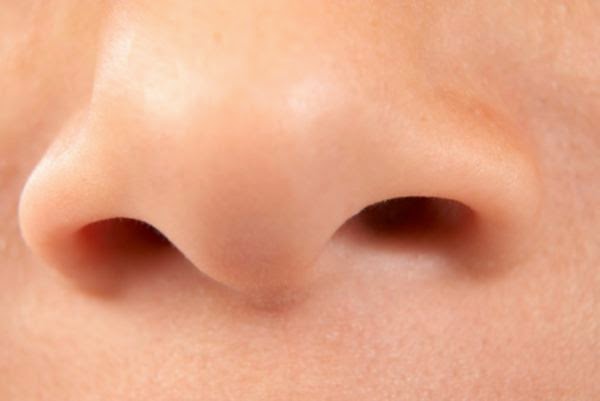
Oh, never mind, you can listen on the website. Oh, not to worry, it's on BBC4. How familiar is this litany?
Look down the TV listings of the oddzillion available channels and amid the bake-offs and the drying paint and the relocations and the game shows and the lottery and the not-very-funny comedies, and you might find a little culture, but if you do you will be very lucky.
As for performances of classical music, with the exception of the Proms in summer... there's hardly anything. Documentaries from time to time, yes; and BBC Young Musician, in which people insist on having talking over performances during the section finals - an indignity not equivalently suffered by the Eurovision Song Contest.
But you will not channel-flip on BBC1 or 2 or even Channel 4 and accidentally discover a piano recital by Daniil Trifonov, or a string quintet playing Schubert, or a fashionable baroque band. You just won't, because the concerts are not there. How can you grumble? You can go to the internet and look it up...
Look down the TV listings of the oddzillion available channels and amid the bake-offs and the drying paint and the relocations and the game shows and the lottery and the not-very-funny comedies, and you might find a little culture, but if you do you will be very lucky.
As for performances of classical music, with the exception of the Proms in summer... there's hardly anything. Documentaries from time to time, yes; and BBC Young Musician, in which people insist on having talking over performances during the section finals - an indignity not equivalently suffered by the Eurovision Song Contest.
But you will not channel-flip on BBC1 or 2 or even Channel 4 and accidentally discover a piano recital by Daniil Trifonov, or a string quintet playing Schubert, or a fashionable baroque band. You just won't, because the concerts are not there. How can you grumble? You can go to the internet and look it up...
This matters. It really does. Anyone can see that people love classical music when they have a chance to hear it - witness all those instances of its use in adverts and football and 50 Shades of Grey. But the bottom line is that unless you put it right in front of them, literally shove it under their noses, nobody new will take any notice. Harsh? Yep.
I know this from selling books.
 Last season we had a number of performances of my concerts-of-the-novels, and of course this is a book-selling opportunity too good to miss.
Venues' sales facilities differ. Some provide very visible trestle tables by the entrance. Others have smallish counters; others still have none.
One principle I learned during all this is that if you do not display the books in an obvious way, nobody will buy them.
You can't guarantee that anyone will buy a book even if they are displayed, of course. But you sure as hell won't sell them if nobody knows they're there, and a handwritten sign saying BOOKS £6.99 doesn't float anyone's boat unless beside it there's a pile of, er, books. You have to make them prominent; you have to make a thing of them.
You can't guarantee that anyone will buy a book even if they are displayed, of course. But you sure as hell won't sell them if nobody knows they're there, and a handwritten sign saying BOOKS £6.99 doesn't float anyone's boat unless beside it there's a pile of, er, books. You have to make them prominent; you have to make a thing of them.
Our most successful sales event ever was a coffee concert at last year's Ulverston Festival. The venue had long trestle tables in the foyer, devoted assistants on duty to take cash and offer change, an announcement at the concert saying I'd be signing books out front afterwards, and plenty of refreshments that let people stay on location without zooming off for caffeine fix elsewhere. They even fed me a GF chocolate brownie.
The least successful sales figures were in places where the books were tucked away apologetically in a corner, or in which any designated sales assistant was busy talking to friends, and of course where the books were not on display at all - even, in some cases, when they were sitting backstage in a cardboard box, waiting.
The least successful sales figures were in places where the books were tucked away apologetically in a corner, or in which any designated sales assistant was busy talking to friends, and of course where the books were not on display at all - even, in some cases, when they were sitting backstage in a cardboard box, waiting.
Take those chain bookstores in which selected books are on display at the front of the shop, piled flat on tables. Few people move beyond those tables to the shelves, unless they are hunting down something specific. It is not that they are lazy, or unimaginative, or too stressed to spend the extra time. It's just that they... don't.
The tables are in front of our noses; the spines on the shelves are not. It's human nature and it's no reflection on anybody - but unless your product is in that fragrant location, you probably won't shift anything. Speaking of noses, deciding not to put something out there because you think nobody wants it anyway really is cutting off yours to spite your face.
The tables are in front of our noses; the spines on the shelves are not. It's human nature and it's no reflection on anybody - but unless your product is in that fragrant location, you probably won't shift anything. Speaking of noses, deciding not to put something out there because you think nobody wants it anyway really is cutting off yours to spite your face.
The surest way not to win the lottery is not to buy a ticket. The surest way not to interest your populace in classical music is not to give them a chance to enjoy it that is so obvious it can't fail to be noticed. You have to make it prominent; you have to make a thing of it. I do not believe this is rocket science. Go and think about it.
Friday, May 16, 2014
Friday Historical: focal Lisztonia with Clément Doucet
If you haven't yet come across Clément Doucet, meet him now. The pianist-creator of such pieces as 'Chopinata' and 'Isoldina' has been taken up and championed gorgeously by the likes of Marc-André Hamelin and Alexandre Tharaud, but his own recordings are stunners in no uncertain terms. I've just come across a few of Doucet's pieces that are new to me. This first one is variously known as 'Hungaria' or, apparently, 'Lisztonia'...
And if you liked that, try this...
Doucet was born in Belgium in 1895 and studied with Arthur De Greef, who had been a pupil of Liszt. He went to New York for three years in 1920 and absorbed stride piano - as you can hear - and on his return to Europe succeeded Jean Wiéner as house pianist at the Paris cabaret Le Boeuf sur le toit (after which the Milhaud ballet is named). He and Wiéner formed a piano duo and gave more than 2000 performances together between 1924 and 1939 and worked with some of the most popular French singers of their era, including Edith Piaf and Jean Sablon.
But after the war it was Wiéner who had the career. Doucet died of chronic alcoholism in 1950. I am now trying to find out what had happened to them both in the intervening years.
One more recording. They were not jazz pianists alone. Just listen to this heavenly Bach.
And if you liked that, try this...
Doucet was born in Belgium in 1895 and studied with Arthur De Greef, who had been a pupil of Liszt. He went to New York for three years in 1920 and absorbed stride piano - as you can hear - and on his return to Europe succeeded Jean Wiéner as house pianist at the Paris cabaret Le Boeuf sur le toit (after which the Milhaud ballet is named). He and Wiéner formed a piano duo and gave more than 2000 performances together between 1924 and 1939 and worked with some of the most popular French singers of their era, including Edith Piaf and Jean Sablon.
But after the war it was Wiéner who had the career. Doucet died of chronic alcoholism in 1950. I am now trying to find out what had happened to them both in the intervening years.
One more recording. They were not jazz pianists alone. Just listen to this heavenly Bach.
Wednesday, May 14, 2014
Meanwhile, it's BBC Young Musician 2014 & some of us ain't happy
I've had a sound-off in the Independent about the frustrations of TV format v. music in BBC Young Musician 2014, which reaches its final on Sunday. Concentrate on formula TV first and foremost and who loses out? The music. The competitors. And the audience. Time for a rethink, TV chaps. Stop patronising us and let us hear them play! Here it is:
http://www.independent.co.uk/arts-entertainment/classical/features/bbc-young-musicians-2014-forget-the-format-give-us-the-music-9364814.html
.
http://www.independent.co.uk/arts-entertainment/classical/features/bbc-young-musicians-2014-forget-the-format-give-us-the-music-9364814.html
.
RPS Awards: That was the year that was...
 |
| Jude Kelly & Gillian Moore of Southbank Centre photo: Simon Jay Price |
One very important prize: Touchpress Classical Music iPad Apps scooped Creative Communication, recognising apps as the way forward for explaining and exploring music - and quite right, too, because these interactive multimedia productions are the only thing I've ever seen that really make me believe the book as a format might just be outdated.
Prizes too for Britten 100, Welsh National Opera, Glyndebourne (for Imago), Harrison Birtwistle (for Moth Requiem), Igor Levit, Patricia Kopatchinskaja. (A certain sense, on occasion, of "round up the usual suspects" - but on the other hand that doesn't mean they are not deserving.)
It was also the year I flippin'well missed the fun. I've been off sick and didn't make it to the dinner, much to my annoyance. So no goss and glitter this time, but naturally one was there in spirit.
Saturday, May 10, 2014
Caturday
Psst, violinists - do you know how lucky you are to play an instrument that your furry friend can't curl up on while you're practising? Full marks to purrcussionist Tim Collins for purrseverence.... it's mewsic to our ears.
Friday, May 09, 2014
The play's the thing...
...and Harriet Walter has given a wonderful interview to Brighton's Argus about it.
It's TONIGHT, 7.30pm. Tickets are walking, but can still be grabbed at: http://boxoffice.brightonfringe.org/theatre/5480/harriet-walter-in-new-play
It's TONIGHT, 7.30pm. Tickets are walking, but can still be grabbed at: http://boxoffice.brightonfringe.org/theatre/5480/harriet-walter-in-new-play
Tuesday, May 06, 2014
What a Gál!
How great it is that Hans Gál is Composer of the Week on BBC Radio 3. He is one of music's most genuine undersung heroes and last year it was wonderful that so many people helped to crowdfund conductor Ken Woods' latest recording in his series of Gál's works with the Orchestra of the Swan. You can listen to the programmes online and for seven days after broadcast here.
Here is an article of mine about him that I think fell down a crack between some editorial floorboards a couple of years ago. Plus a video in which Ken talks about Gál's life and work and we hear a sample of the latter. Enjoy.
 One of Gál’s
most successful works, in the 1920s, was his opera Die heilige Ente (The Sacred Duck), which stayed in theatrical schedules
constantly from its premiere in 1923 until it
One of Gál’s
most successful works, in the 1920s, was his opera Die heilige Ente (The Sacred Duck), which stayed in theatrical schedules
constantly from its premiere in 1923 until it
was banned by the Nazi regime, along with all works by Jewish composers. Gál was appointed director of the Music Conservatory in Mainz in 1929, but the Nazis had him thrown out in 1933.
Here is an article of mine about him that I think fell down a crack between some editorial floorboards a couple of years ago. Plus a video in which Ken talks about Gál's life and work and we hear a sample of the latter. Enjoy.
Someday an
alternative survey of 20th-century music should take a thorough look
at the myriad composers who were reviled, then exiled, for being born in the
wrong place at the wrong time, or for writing the ‘wrong kind’ of music, and
often for both. When that happens, Hans Gál’s star will shine bright.
The Austro-Hungarian
composer and scholar was born in 1890 and grew up in Vienna; later he and his
family were forced to flee first Nazi Germany, then Austria, for Britain. He wrote
prolifically, clocking up more than 100 works, and he lived to be 97. Yet for
decades even his finest music lay unrecognised and unplayed.
But in the last
year or two, a series of recordings spearheaded by the Hans Gál Society and the
composer’s daughter, Eva Fox-Gál, has been bringing him back at last to the public
notice he deserves.
Gál effectively
suffered a threefold misfortune. He believed himself part of the great German
tradition of music-making; then the Nazis decided he was not. After escaping to
Britain, he was interned as an ‘enemy alien’ on the Isle of Man, and his music was
sidelined for sounding too German. Earning his living by teaching at Edinburgh
University, he continued to write symphonies in the tradition of Haydn and
Beethoven as recently as the 1970s – but by then, the musical elite tended to react
vituperatively to new music that did not toe the line of accepted contemporary style.
Kenneth Woods is
the conductor for several of the new recordings – the latest is Gál’s Symphony
No.4 (on Avie Records). When he first realised Gál had written so much music,
he says, he was astonished. Though familiar with Gál’s performing edition of
Brahms’s symphonies and his superb books on Brahms and Schubert, Woods had had
no idea that the academic was primarily a composer. Many of his finest works,
such as the early Violin Concerto, had gone unperformed for 70 years.
“It’s tremendous
stuff,” says Woods. “It’s the opposite of what people thought they had to
conform to at the time; Gál just kept on writing in his own style.
“The standard of
his works is uniformly high. To my mind, the closest comparison between Gál and
another composer would be Haydn: the surface beauty of the music is there, but
it’s only the tip of the iceberg. What’s vital is the subtlety of what goes on
beneath. And because the language is so classical, the writing is very
‘exposed’, making his music tremendously difficult to play.”
Eva Fox-Gál (who
was born in Britain in 1944) has made it her mission to champion her father’s
works; and her son, Simon Fox-Gál, is the sound engineer on the Avie recordings.
“My father was genial, well known for his wit, modest, good fun to be with, and
never pushed himself or his own work forward,” Eva remembers. “But that was his
outer shell. To know what he was like inside, one needs to listen to his music.
“His writings
about other composers are also very revealing about himself. At the beginning
of his book on Schubert, he talks about Schubert’s outer persona and how the
composer’s contemporaries mistook that for the real person. My father thought that
that was what Schubert needed, in order to safeguard his inner core for his
work. It’s his defence. I think that was what my father also had to do.”
One of Gál’s
most successful works, in the 1920s, was his opera Die heilige Ente (The Sacred Duck), which stayed in theatrical schedules
constantly from its premiere in 1923 until itwas banned by the Nazi regime, along with all works by Jewish composers. Gál was appointed director of the Music Conservatory in Mainz in 1929, but the Nazis had him thrown out in 1933.
He and his
family returned to Vienna, which they escaped at the time of the Anschluss in
1938. After a false dawn in Britain – in which Gál was much assisted by the
great musicologist Donald Francis Tovey, who brought him to Edinburgh University
to catalogue the music library – the composer was interned on the Isle of Man.
This was one of
the most difficult times of all, says Eva: “That collection of refugees really
represented Hitler’s greatest enemies, yet they were seen as a danger. The idea
that they were a ‘fifth column’ that put the country under threat was
completely ridiculous. There was no understanding of who they were, or of the
horrors that they had already been through.” The ever-increasing stress proved
intolerable for the Gáls’ younger son, who took his own life before the war was
over.
Michael Haas, a
distinguished record producer and music curator of the Jewish Museum in Vienna,
is among Gál’s most passionate advocates. He describes Gál as an
‘anti-Romantic’: a composer who was convinced neither by the effusive styles of
Liszt and Wagner, nor by the mainstream trends of his own time such as
atonality, 12-tone ‘serialism’ and the neo-classicism of Stravinsky and Poulenc.
“His antidote to
Romantic excesses was to reach back to earlier models,” Haas suggests. “Most people
assume the model was Brahms, but I believe that actually it was Mendelssohn.
This accounts for his frequent lack of overt emotional abandonment.
“For me, Gál is the
‘Everyman Composer’ of the Weimar years. He was conventional, but not banal. He
was far more representative of what musical life was actually like than, say,
Alban Berg or Darius Milhaud. It would be like comparing Norman Rockwell with
Andy Warhol. I love some of his more expressive works and admire his aesthetic
composure and his extraordinary intelligence and cultivation.”
The
rehabilitation of Gál’s music is long overdue – but better late than never.
“Because the music is so difficult to play,” says Woods, “even when occasional
performances were given, sometimes they didn’t make a strong enough case for
it. But now, working with great musicians who are hungry to perform it, we hope
these recordings will give people a chance to hear what wonderful stuff it is.”
Monday, May 05, 2014
Dame Harriet Walter stars in my play THIS FRIDAY
Please come to the Brighton Fringe and the MOOT - Music of Our Time series on FRIDAY 9 MAY when the utterly incredible Dame Harriet Walter (above) stars in my play A Walk through the End of Time together with Guy Paul, the wonderful American actor who happens to be her husband.
The play, in one act, explores the way Olivier Messiaen created his Quartet for the End of Time in a prisoner-of-war camp in 1940, through the prism of a contemporary story about two people whose lives have been profoundly touched by the work. (More about it here.) In the second half the Ether Quartet plays the complete quartet. St Nicholas's Church is close to Brighton station. Book here!
Saturday, May 03, 2014
Cygnets in Odessa
Ukrainian ballerinas perform the Dance of the Cygnets from Swan Lake in front of Odessa's military museum and some tanks. The clip was apparently broadcast on Wednesday and thereafter went up online. Many thanks to Gramilano for drawing attention to it.
According to The Moscow Times:
Ballerinas in the Ukrainian city of Odessa have performed a dance from the Swan Lake ballet for Russian President Vladimir Putin — but the gesture was far from salutary.
The dance, performed to music by composer Pyotr Tchaikovsky outside Odessa's military history museum, was a nod to a Soviet-era tradition, the performance's organizer said, noting that state-run television traditionally aired classical music during periods of great change in the Soviet Union.
"For millions of Soviet people, televised performance of the world-renowned ballet 'Swan Lake' always signaled a change in the country's leadership — either the death of the Secretary-General, or his ouster as a result of a coup," regional lawmaker Oleksiy Honcharenko said when introducingthe performance in front of Ukrainian television cameras.
"Because Vladimir Putin has made a fatal mistake by unleashing aggression against Ukraine, today Odessa, as a cultural capital, performs for him this portentous composition," he said in footage that aired on Ukrainian television and was posted online Wednesday.This morning there comes news that more than 30 people were killed and 200 injured in Odessa yesterday when a trade union building was set on fire during clashes between pro- and anti-Russian groups. Our hearts go out to everyone there, together with a plea for peace.
These Cygnets also remind us of the way that classical music/ballet is often used as a kind of official safety curtain when seismic events are taking place behind it; it is a trick that is by no means exclusive to the old USSR. Depending on who is doing it, and how, and where, and when, it can also be distraction, a whitewash, or - very occasionally - part of a larger-scale brainwash.
You don't even have to look at world politics to see this in action. I once worked for a company that had an open-plan office in Camden Town; and if you heard Bach violin concertos drifting peacefully across the space on a Friday afternoon, it was a sure-as-hell sign that in the MD's corner box someone was being made redundant.
Friday, May 02, 2014
Music to your WHAT?
It seems the profile of female conductors has been raised to the point that they can be considered a good way to advertise...well, certain bits of clothing. One maestra mate sent me a link to this video, declaring herself lost for words and hoping I'd have some. Hmm.
Wednesday, April 30, 2014
Vienna takes the digital Sachertorte


Have a read of this announcement today from the Vienna State Opera. Now, THAT'S the way to do it!
WIENER STAATSOPER live at home
Overview
What Vienna State Opera is offering is not comparable to standard live streaming programmes – it’s more like what a TV station or network does.
What Vienna State Opera is offering is not comparable to standard live streaming programmes – it’s more like what a TV station or network does.
-
Completely new state of the art video and audio equipment and studios have been built
into the house – all remote control, invisible and distracting neither public nor artists, with
full live streaming technology;
-
Full HD video and high end audio – every single evening can be broadcasted, if decided
for, and capable of postproduction if required; for the 2014/2015 season there will be about
45 opera and ballet performances broadcasted;
-
A new webportal, a SmartTV, a Second Screen and a Publications App have been
programmed;
-
Innovative technologies offer synchronized multilingual subtitles and a “moving score”
functionality - the customer at home can watch the opera, while enjoying subtitles and (for
selected performances) historic scores from Vienna State Opera’s archives on a tablet
computer or smartphone in Wiener Staatsoper Second Screen App;
-
Opera lovers all over the world can switch between two live channels of the same
performance at any time while watching: a total view of the stage, and a live cut opera film
with closeups, moving cams, backstage views ...;
-
On all platforms: computer screens or connected beamer / TV set, Connected or SmartTV
– on Samsung SmartTV also through an exclusive App;
-
Everywhere in the world at Prime Time: the live streams from Vienna State Opera are
played out timeshifted, according to the viewers’ timezone;
-
Multimedia progamme booklets can be downloaded in the Wiener Staatsoper Publications
App.
WIENER STAATSOPER live at home is payable, not free of charge,
because art has value, also on the internet
new revenue streams have to be assured for the opera and its artists, facing the decline of
the physical music industry and the chances that lie in the growing digital markets For WIENER STAATSOPER live at home
delivering high class opera to the homes of music lovers worldwide through the
internet;
a video store opens the vast archives as “Opera rental” on-demand streams
a video store opens the vast archives as “Opera rental” on-demand streams
Vienna State Opera and Samsung are working together on a world première:
On May 7 premium UHD content – Giuseppe Verdi’s Nabucco with Plácido Domingo in the title role – will be streamed live for the first time ever to UHD TVs all over the world:. It will be fully implemented in the Wiener Staatsoper Samsung SmartTV App, offering a timezone shifted playout, so that opera lovers can watch this broadcast at their
respective prime time.
staatsoperlive.com | www.wiener-staatsoper.at
On May 7 premium UHD content – Giuseppe Verdi’s Nabucco with Plácido Domingo in the title role – will be streamed live for the first time ever to UHD TVs all over the world:. It will be fully implemented in the Wiener Staatsoper Samsung SmartTV App, offering a timezone shifted playout, so that opera lovers can watch this broadcast at their
respective prime time.
staatsoperlive.com | www.wiener-staatsoper.at
Tuesday, April 29, 2014
ENO turns to musicals
ENO announces its 2014-15 season this morning. Gently buried within is the information that they are going to do... musicals. They have a new partnership with Michael Grade and Michael Linnit to this end.
The latter two say:
"We are delighted with this unique and exciting partnership, which creates an opportunity to embrace the new climate where audiences seem to enjoy the blurring of boundaries between opera, theatre and musicals and clearly they love a first class show. Bringing the considerable creative flair of ENO to bear on modern musicals will bring new audiences to the Coliseum, new revenues to ENO, and a new look at some of the greatest pieces of musical theatre ever written."
OK, so maybe they need the money; who wouldn't these days? But er, modern musicals? Isn't the West End a bit full of commercial theatres doing this already? Major, major hmmm. That is not, repeat NOT, why we need a subsidised English-language opera house. Jerome Kern's Showboat would be great, of course, as would West Side Story, but these are hardly modern...
First reaction to the rest of the season, though, is that it is absolutely yummy scrummy. A few highlights, in no particular order:
Stuart Skelton sings Otello.
First full staging of John Adams's The Gospel According to the Other Mary, directed by Peter Sellers.
Meistersinger with Ed Gardner conducting, directed by Richard Jones. Yes yes yes!
Mike Leigh to make operatic directorial debut in The Pirates of Penzance. (?!)
Richard Jones also directs The Girl of the Golden West, with Susan Bullock as Minnie.
Felicity Palmer as the Countess in The Queen of Spades.
New opera about 9/11 by Tansy Davies.
Joanna Lee writes ENO's first opera for children.
New partnership with Bristol Old Vic => Monteverdi Orfeo directed by Tom Morris.
ENO conducting debuts for Joana Carneiro and Keri-Lynn Wilson.
London Coliseum to open to the public all day, with new foyer cafe & general retweaking of eateries/foyers.
New research project with UCL into the future of the performing arts. (But do see other announcement, top.)
UPDATE: Here is the season trailer, just released...
The latter two say:
"We are delighted with this unique and exciting partnership, which creates an opportunity to embrace the new climate where audiences seem to enjoy the blurring of boundaries between opera, theatre and musicals and clearly they love a first class show. Bringing the considerable creative flair of ENO to bear on modern musicals will bring new audiences to the Coliseum, new revenues to ENO, and a new look at some of the greatest pieces of musical theatre ever written."
OK, so maybe they need the money; who wouldn't these days? But er, modern musicals? Isn't the West End a bit full of commercial theatres doing this already? Major, major hmmm. That is not, repeat NOT, why we need a subsidised English-language opera house. Jerome Kern's Showboat would be great, of course, as would West Side Story, but these are hardly modern...
First reaction to the rest of the season, though, is that it is absolutely yummy scrummy. A few highlights, in no particular order:
Stuart Skelton sings Otello.
First full staging of John Adams's The Gospel According to the Other Mary, directed by Peter Sellers.
Meistersinger with Ed Gardner conducting, directed by Richard Jones. Yes yes yes!
Mike Leigh to make operatic directorial debut in The Pirates of Penzance. (?!)
Richard Jones also directs The Girl of the Golden West, with Susan Bullock as Minnie.
Felicity Palmer as the Countess in The Queen of Spades.
New opera about 9/11 by Tansy Davies.
Joanna Lee writes ENO's first opera for children.
New partnership with Bristol Old Vic => Monteverdi Orfeo directed by Tom Morris.
ENO conducting debuts for Joana Carneiro and Keri-Lynn Wilson.
London Coliseum to open to the public all day, with new foyer cafe & general retweaking of eateries/foyers.
New research project with UCL into the future of the performing arts. (But do see other announcement, top.)
UPDATE: Here is the season trailer, just released...
Monday, April 28, 2014
Sad news: Julian Lloyd Webber must end his performing career
A statement from Julian's press agent informs us:
Cellist Julian Lloyd Webber announced today that he has been forced to stop playing due to a herniated disc in his neck which has reduced the power in his right arm. His final performance as a cellist will be on 2 May at the Forum Theatre, Malvern with the English Chamber Orchestra.
Lloyd Webber said: “I am devastated. There were so many exciting plans that cannot now come to fruition. I have had an immensely fulfilling career and feel privileged to have worked with so many great musicians and orchestras but now I have to move on.
I have no intention of enduring a forced retirement though. I would like to use the knowledge I have gained through my life as a musician and an educator to give back as much as I can to the music profession which has given me so much over the years.
I have just completed two new recordings which will be released later this year but after 2 May my cello will fall silent. I now need time to reflect and to consider this sudden and distressing life-changing situation and there will be no further comment at this time".
Cellist Julian Lloyd Webber announced today that he has been forced to stop playing due to a herniated disc in his neck which has reduced the power in his right arm. His final performance as a cellist will be on 2 May at the Forum Theatre, Malvern with the English Chamber Orchestra.
Lloyd Webber said: “I am devastated. There were so many exciting plans that cannot now come to fruition. I have had an immensely fulfilling career and feel privileged to have worked with so many great musicians and orchestras but now I have to move on.
I have no intention of enduring a forced retirement though. I would like to use the knowledge I have gained through my life as a musician and an educator to give back as much as I can to the music profession which has given me so much over the years.
I have just completed two new recordings which will be released later this year but after 2 May my cello will fall silent. I now need time to reflect and to consider this sudden and distressing life-changing situation and there will be no further comment at this time".
Subscribe to:
Comments (Atom)